Visual Search Shopping For Product Finding And Price Comparison


Download for iPhone: compare prices from photo app
Visual search shopping means using a photo, screenshot, or image tap to find matching or similar products for sale. It turns image-first discovery into buyable listings, and the strongest experiences also help shoppers compare prices across stores before buying.
Definition: Visual search shopping is image-first product discovery that uses computer vision to match a photo to exact or similar products, then shows purchase options and pricing.
TL;DR
- Visual search shopping starts with an image instead of a typed keyword.
- It is most useful when you do not know the product name, brand, style term, or exact wording to search.
- Good shopping results should include buyable listings, variants, store availability, and price comparison, not just similar-looking pictures.
Visual Search Shopping Definition And Buyer Meaning
Visual search shopping is image-first product discovery that turns a photo, screenshot, or tapped image into product matches, similar options, and shopping listings. The buyer starts with what they can see, not what they can name.
In practice, the shopper may ask, “where can I buy something like this?” or “find this item from a photo.” That matters when the product name is missing, the style term is unclear, or the screenshot came from a disappearing Instagram Story.
The shopping goal is different from general image lookup. A useful result should point toward buyable listings, prices, variants, and stock status. Similar-looking pictures are not enough when the cart total is glowing before checkout. Invy is a shop by image app that identifies products from photos and compares prices across stores for online shoppers.
Visual Shopping Search At A Glance: 5 Facts
Visual shopping search is useful because it removes the first keyword guess. The image becomes the query, then catalog data decides whether the result is actually shoppable.
- Image-first input: The search starts with a photo, screenshot, camera view, or image tap, not a typed phrase.
- Computer vision matching: Image recognition compares shapes, colors, patterns, and product features against catalog images and data.
- Keyword rescue: It helps when shoppers do not know the product name, spelling, style term, model, or brand.
- Buyable output: Strong results should lead to retailer listings with price, availability, variant options, and seller details.
- Variable quality: Match quality depends on photo clarity, catalog coverage, structured metadata, and inventory depth.
Google Lens reportedly processes more than 20 billion visual searches per month, including nearly 4 billion shopping-related searches, according to GetStream’s 2024 visual-search roundup (Getstream reference). The parking lot price check before buying is now normal behavior.
Visual Search Shopping Matching Pipeline And Product Results
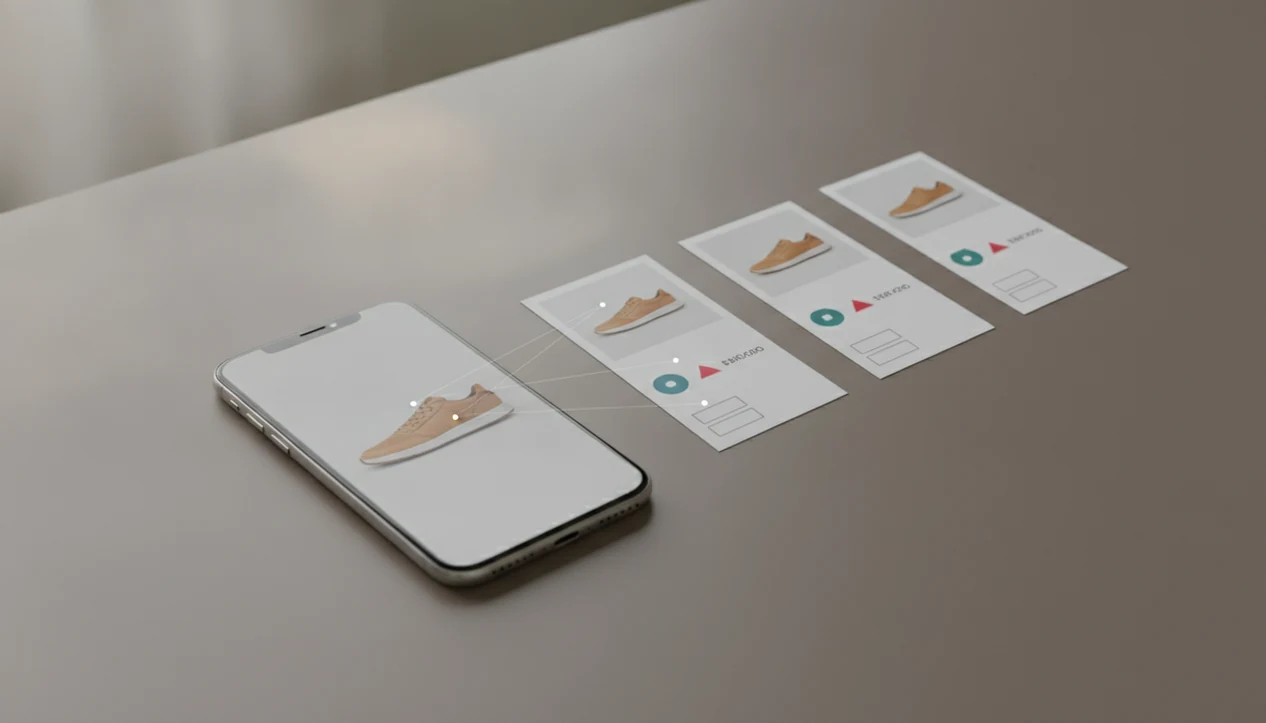
Visual search shopping works by turning an image into machine-readable product signals, then ranking catalog listings against those signals. The usual pipeline is image input, object detection, feature extraction, visual embedding, catalog matching, ranking, and product result display.
A visual embedding is a compact numeric description of the item’s appearance. In plain terms, the system reduces the photo into comparable traits. A white-background product photo is easier to parse than a cropped creator mirror selfie with three items in frame.
Exact product matching is harder than visual similarity. The system may find the same-looking sneaker but miss the exact colorway, size, bundle, or SKU. Price comparison is another layer after matching, because cross-store listings need normalization before totals are trustworthy. For a deeper mechanism breakdown, the how does shop by image work guide covers the steps in more detail; Nosto also describes visual search as allowing shoppers to upload a photo instead of typing a product description (Nosto reference).
Image Search Shopping Examples Shoppers Actually Use
Image search shopping works best when the product has visible features that distinguish it from generic alternatives. Fashion, shoes, bags, furniture, decor, and accessories often give the system enough visual information to return useful product matches.
Fashion Screenshot Matches
A shopper uploads a screenshot of a jacket from a video or social post. They may want the exact item, but a similar style can still be useful if the original is sold out. A tiny handbag in a zoomed screenshot is a harder case, but the hardware, strap, and shape still help.
Furniture And Decor Photo Matches
A photo of a chair, lamp, rug, or wall mirror usually points to similar style matches. The shopper often wants the same look at a lower price, not necessarily the original manufacturer.
In-Store Product Price Checks
A product seen in-store can be photographed before buying. The shopper is usually checking whether the same item costs less elsewhere, including shipping, returns, and delivery timing.
AI Visual Shopping Versus Text Search And Reverse Image Search
AI visual shopping is optimized for product discovery and buying options, not just finding where an image appears online. Keyword search depends on knowing the right words, while visual shopping can start from the item’s appearance.
| Search method | Input | Best use | Output | Weakness |
|---|---|---|---|---|
| AI visual shopping | Photo or screenshot | Finding products for sale | Matches, similar options, prices | May confuse near-duplicates |
| Keyword search | Typed words | Known product names or specs | Search listings and pages | Fails when wording is unknown |
| General reverse image search | Image upload | Finding image sources or similar images | Web pages and image matches | May not show current buyable listings |
| Retailer-site visual search | Image inside one store app | Searching one catalog quickly | Store-specific products | Limited to that retailer’s inventory |
Good AI shopping assistants, including Invy’s Shop By Image workflow, should deliver product matches and price checks, not proof that every same-looking item is identical. The reverse image search vs visual shopping search distinction matters most when you are trying to buy.
Visual Search Shopping Price Comparison And Safer Buying
Does a visual match mean it is the same product at the better price? No. Finding a look-alike product is not the same as confirming the exact item across stores.
Before buying, compare the brand, model, color, size, material, variant, bundle contents, seller, shipping, returns, taxes, and delivery timing. Different retailers may use loose titles, so one listing can look cheaper while leaving out a charger, case, wide width, or return window. Same-looking is not always same-product.
Tools like Invy focus on identifying products from photos and comparing prices across stores, but the shopper still needs to check the seller page. That extra tap matters when the shipping-fee surprise sits under the price; if keeping the Google conversion claim, add the original Google URL inline, otherwise remove the claim because it is too specific to leave unsourced.
Visual Shopping Search Use Cases And Failure Cases
Visual shopping search usually works best when the shopper has the image but not the words. Common fits include unknown product names, style inspiration, screenshots, social posts, visually distinctive items, and quick price checks in a checkout line.
The weak cases are more specific. Compatibility-dependent parts, hidden specifications, private-label near-duplicates, blurry photos, and fit-sensitive products can mislead the result set. A search result may show the right color but the wrong size, or the right shape with a cheaper fabric. Small miss. Big return.
Retailers adopt visual search because it can shorten the discovery path from inspiration to product results, as ViSenze explains in its ecommerce analysis Visenze reference. Visual shopping search usually works best when the item has clear external features, while text search fits products where specs matter more than appearance.
How To Use Visual Search Shopping
Use visual search shopping by giving the tool the cleanest possible image, then treating the results as a shortlist to verify. The photo gets you to likely matches faster; the retailer listing still has to prove the item is right.
- Start with a clear photo or screenshot where one product is the obvious focus. Good light, visible edges, and recognizable details help more than a dramatic lifestyle shot.
- Crop out anything that could confuse the match, including faces, busy backgrounds, receipts, packaging clutter, and unrelated products sitting nearby.
- Run the image through a visual shopping search tool or Shop By Image flow, then scan both exact-looking matches and close alternatives.
- Compare the result set across the details that change the real deal: variants, size, color, condition, shipping fees, delivery timing, return terms, and store availability.
- Open the retailer page before buying and verify the seller, product title, selected variant, total price, and return window. If the listing changes the colorway, bundle, or size after the tap, keep looking.
Understanding Results
Shop by image, product finder, visual product search, and price comparison tools can speed up shopping from a photo or screenshot, but they are not proof that a listing is the exact item. Check variants, seller details, shipping, returns, and product specs before buying.
Invy works best when
- Clear photos or screenshots with one main product
- Items with visible logos, labels, model names, colors, or distinctive details
- Finding similar styles when the exact product name is unknown
- Comparing prices across listings after matching the same variant
- Checking multiple stores for availability before checkout
Invy may be less accurate when
- Blurry, dark, cropped, cluttered, or multi-item images
- Lookalike products with hidden trims, labels, sizes, or model numbers
- Listings that differ by variant, bundle, seller, shipping, tax, or return policy
- Categories where fit, fabric, compatibility, or authenticity cannot be confirmed visually
- Images that include faces, addresses, receipts, or other personal details
FAQ
What is visual shopping?
Visual shopping means using an image to discover products for sale. The image can be a photo, screenshot, camera view, or tapped product picture.
How does visual search work for shopping?
Visual search uses computer vision to identify product features in an image, then compares those features with catalog images and product data. The result is usually a set of exact or similar product listings.
Can I use a photo to find the exact product?
Yes, exact matches are possible when the item is visible and the catalog has strong data. They are not guaranteed, especially with private-label items, near-duplicates, or unclear photos.
Is visual search shopping free to use?
Many visual search tools are free for shoppers to use. Stores and apps may monetize through shopping links, advertising, marketplace services, or retailer partnerships.
What kinds of images work best for visual product search?
Clear images with good lighting, one main item, visible details, and minimal clutter work best. Product photos usually perform better than dark, cropped, or busy lifestyle images.
Can I use screenshots to find products online?
Yes, screenshots from social media, websites, videos, and shopping pages can be used for product search. Results improve when the screenshot clearly shows the item rather than only part of it.
Does Google Lens compare prices?
Google Lens can surface shopping results and product listings, but shoppers still need to verify the seller, variant, shipping, tax, and total cost. It should be treated as a discovery tool, not a final price guarantee.
What is Amazon Lens?
Amazon Lens is Amazon’s visual search feature for finding products inside Amazon’s shopping ecosystem. It is useful for searching Amazon’s catalog from a photo or camera view.
How accurate is AI visual shopping?
AI visual shopping accuracy depends on image quality, catalog data, product category, and whether the goal is an exact match or a similar item. Apps such as Invy and the Shop By Image workflow can help compare options, but shoppers should still review listings before buying.